
It was May 1984 when Mick O'Connor landed in Slovenia, leaving behind his life in England and his job in the Royal Marines of Great Britain. That day, he decided he wouldn't use his return ticket, marking the beginning of an unexpected journey.
Travelling through Yugoslavia without a precise plan, Mick arrived in Belgrade after several weeks. There, he boarded a ship and sailed down the Danube to Kladovo, then continued hitchhiking south. That's how he found himself in Zaječar, where he met Dragan, a friendly local, who connected him with a friend who was a translator and mentioned that that very evening he might meet someone planning a similar journey to Skopje.
That's when Mick met Beka, and the next morning, they spontaneously decided to continue their journey to Macedonia together. She with an English dictionary, he with a map, they travelled through Skopje, Ohrid, and Prespa. However, their paths unexpectedly diverged at the border with Greece because Beka didn't have a passport. They said goodbye briefly, without a clear plan of whether they would see each other again.
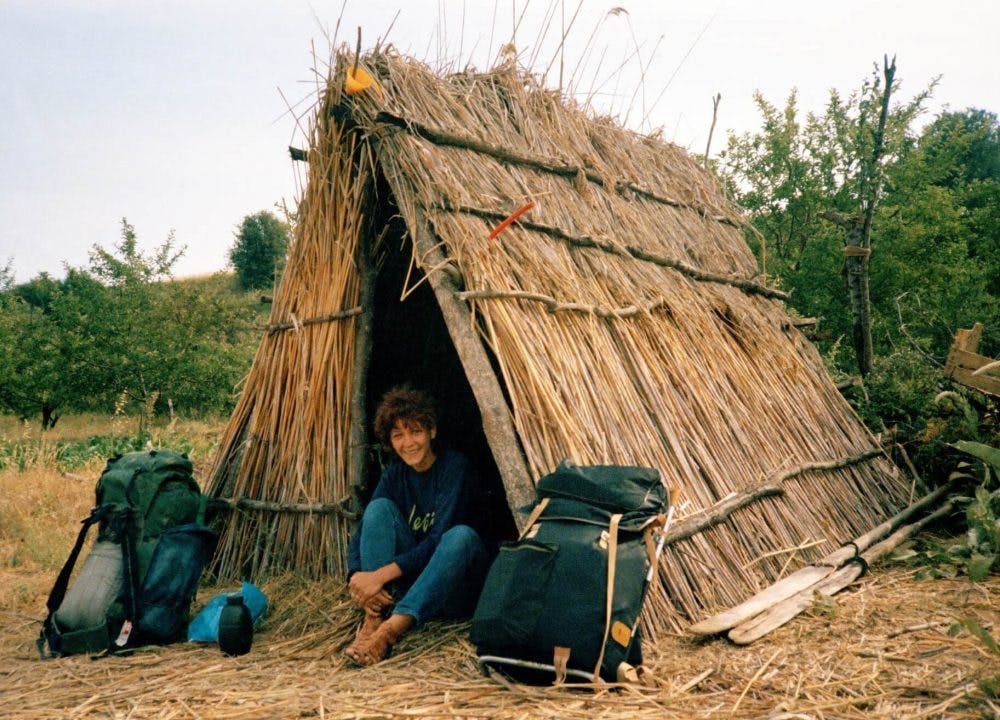
Beka Lake Prespa 1984.
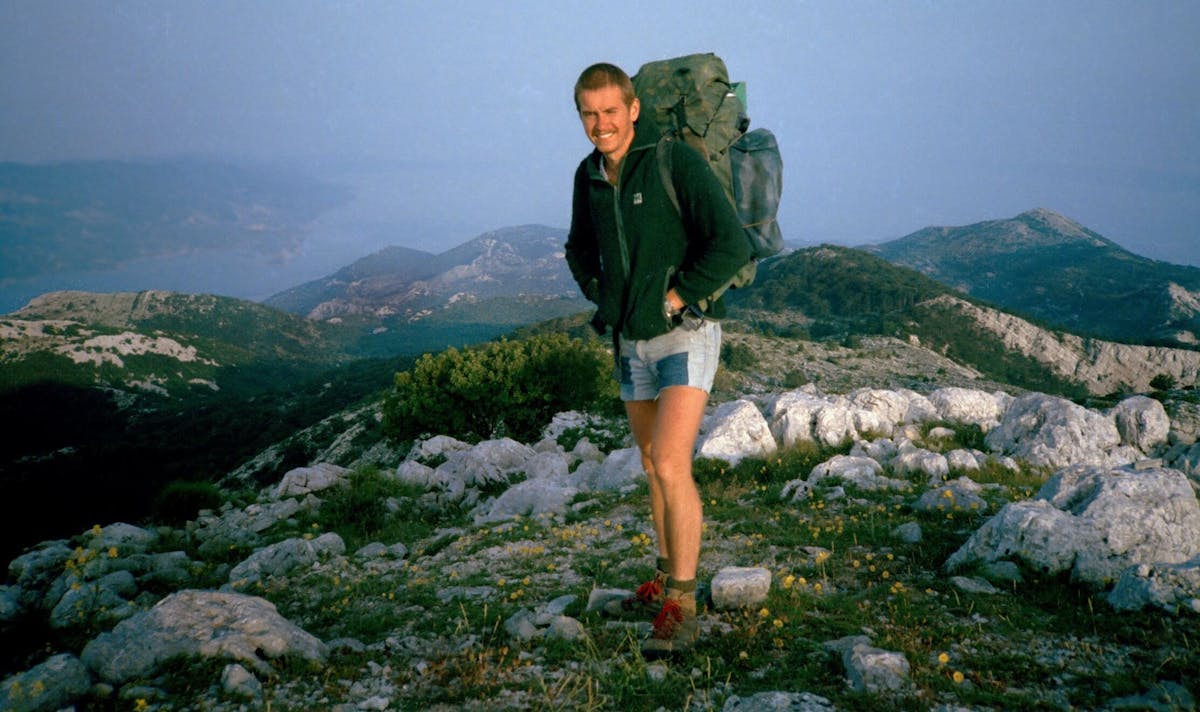
Mick In The Balkans 1984.
Mick then continued alone, but before heading to Turkey, he returned to Zaječar. With the help of a map that Beka had drawn for him earlier, he found her house and spent two weeks with her family. After that, they saw each other and travelled through Europe together, with Beka eventually returning home.
Two decades later, while working in Amman, Mick decided to renew contact with Beka. He sent her a postcard, and then a letter from Manchester, which, due to a postal delay, arrived even before the postcard. At the moment when he was staying in Iraq, his phone rang — it was Beka's voice.
They began exchanging letters and photographs again, renewing contact as if time hadn't passed. Several months later, Beka's husband suddenly passed away. Mick then withdrew, respecting the circumstances, until Beka's daughter Smiljana said:
"Why don't you call that Englishman here?"
When they met again, everything picked up where it had once left off long ago. That's how the story that now lives through Vinarija RAJ began.
After reuniting and deciding to live together, Mick and Beka married in Zaječar in 2007. They soon began spending weekends in the village of Rajac, where they met a man at the wine cellars and tried his wine. They started visiting him, which over time grew into a friendship. Every weekend they would be at his place, socialising.
When he saw how much they enjoyed coming, he asked them why they didn't buy something themselves – and offered his help. He introduced them to people in the village and helped with their first land purchases.
The first vineyard was Vukas's vineyard, on the Padina plot, purchased from Dragisa Milenović. The variety on that parcel is Game and later Crna Tamjanika. They kept the vineyard's name because the vineyard itself was excellent. They generally name vineyards after the people they bought them from. All of these were old, revitalised vineyards.
After that, they continued buying land and planting vineyards because at that time they couldn't find a reliable local partner. While working with some people, they saw spraying practices they didn't support, and that wasn't the direction they wanted to go. Because of this, they gradually turned to organic wine production.
After Game, a parcel in Zapis was purchased and Beli Sovinjon was planted. The purchases were spontaneous, with the logic of rounding off parcels from road to road. Investment was made without a pre-developed plan – out of hedonism, enjoyment of the process, and love for the Rajac area, nature, land, and wine.
The size of the vineyards dictated the size of the winery. The reason for such a large winery is simple: they needed somewhere to store all the grapes that come from their own vineyards.
Over time, the vineyards expanded to three different plots – Padina, Lipovac, and Staro brdo. This wasn't accidental: they followed the logic that if bad weather hits one location, the others can remain preserved.
They applied the advice and experiences of older Rajac residents, who selflessly shared their knowledge – and that's how they chose where to buy land. Each subsequent plot was the result of those conversations, fieldwork, and careful observation.
They wanted the winery to have several labels and grape varieties, so they expanded production accordingly.
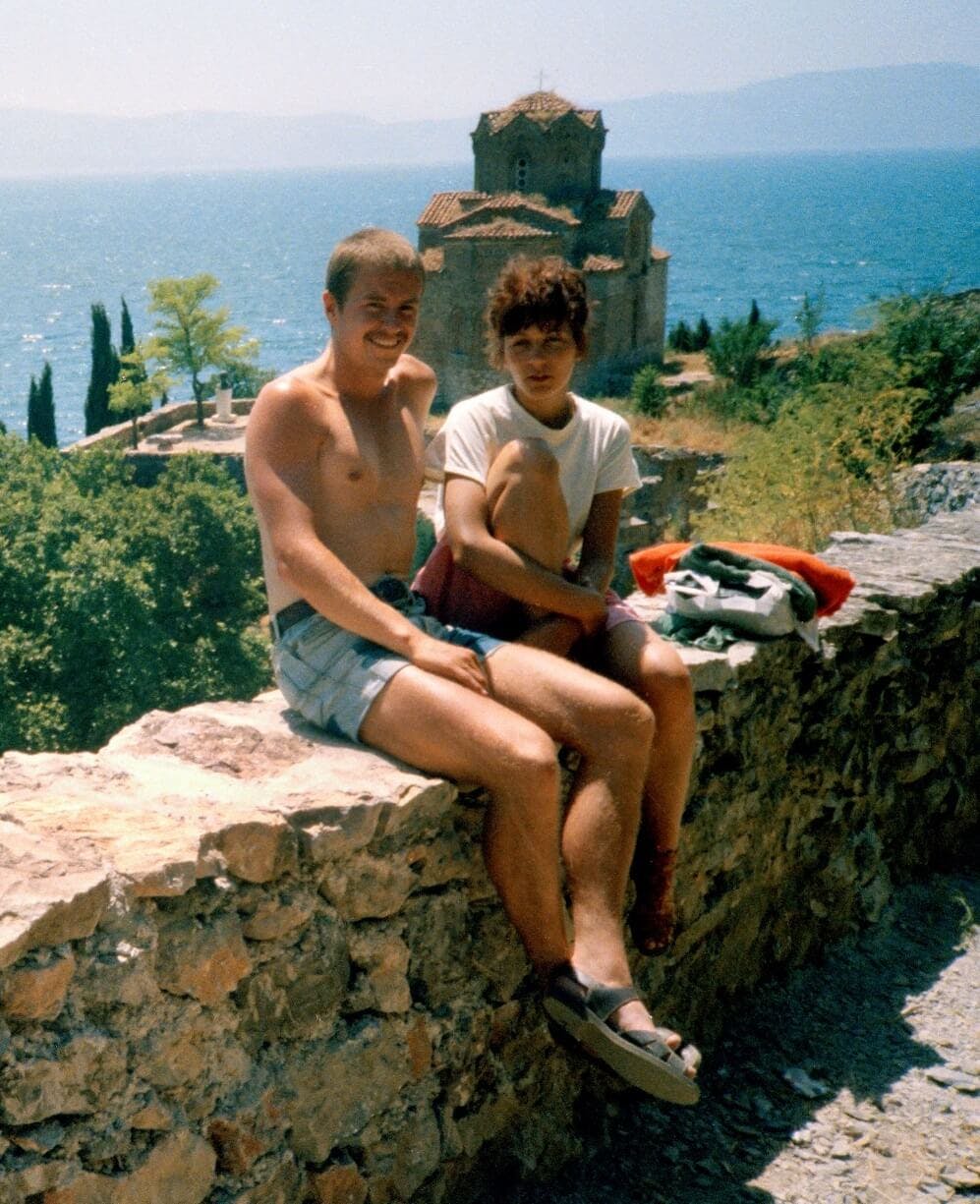
Beka & Mick at Ohrid 1984.
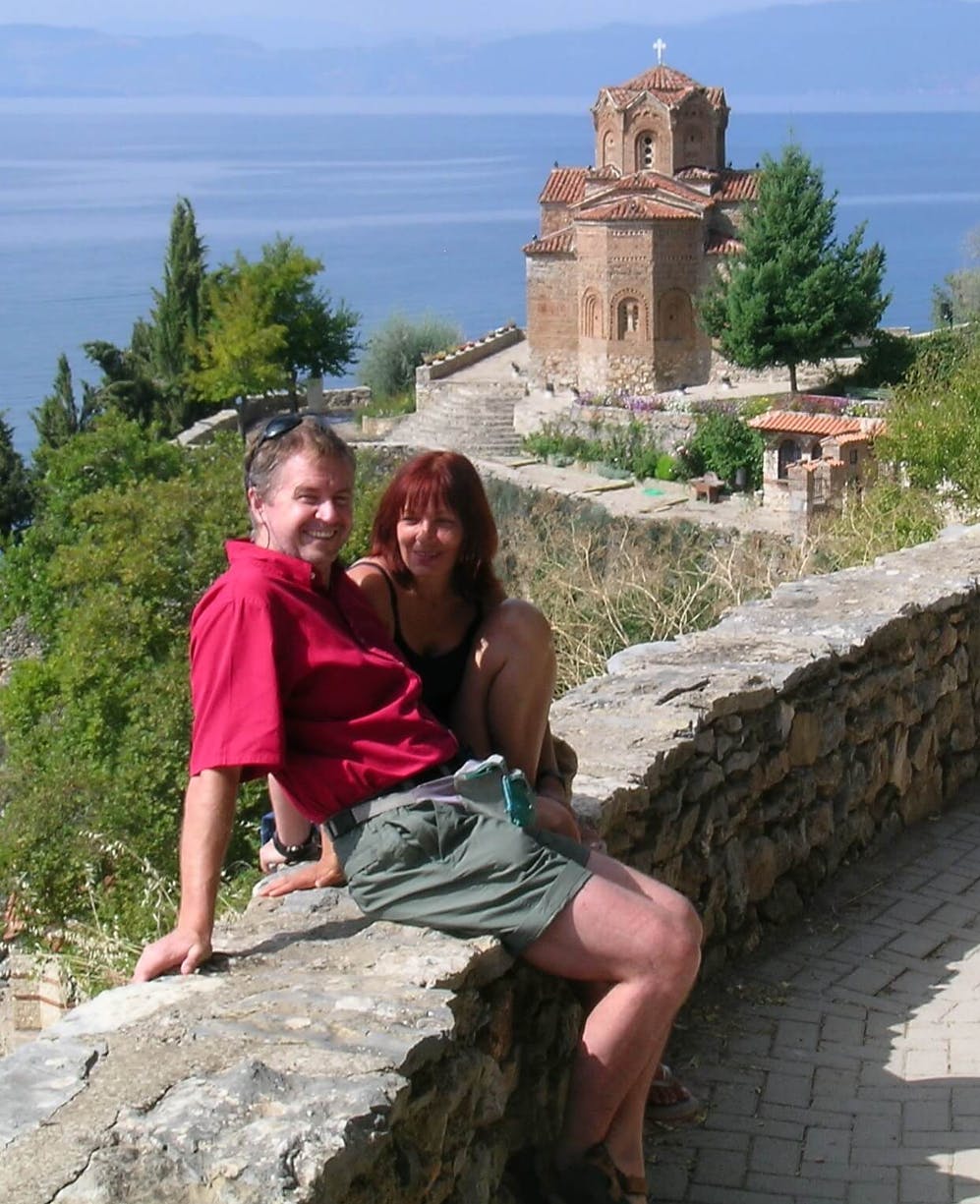
Beka & Mick at Ohrid 2005.
During wine development, they had an agency that helped them develop labels and products. The agency would come, look at where they live, how they work, what the environment is like – and based on that, suggest wine names. They would decide which names to take. The first label was created locally – inspired by the winery's position, the river, the hills, the house in the village.
Initially, they worked with people who had space near the railway station – the current location of the winery. When those people withdrew, Mick and Beka remained at that location and began looking for owners to buy the space. For years they searched for people and multiple heirs just to be able to realise the purchase.
When they finally succeeded – the renovation began.
The story of Vinarija Raj continues through their children – Momčilo and Smiljana.
Both have been helping in the business and working for the company from the beginning.
Since 2020, Smiljana has been much more intensively involved in winemaking. Although she received her master's degree in Liberal Arts in Hamburg, where she lived and was involved in art, cooking, and cultural politics, she decides to return to her hometown of Zaječar and dedicate herself to the winery.
Circumstances are such that at the same time, another world traveller moves to the village, Kristina Lukić, a professional oenologist, who advises, supports, and helps in wine production. Kristina and Smiljana together create wines in harmony with nature, and each harvest brings something new. The idea is that production in the vineyard should be organic, with interventions during fermentation kept to a minimum. Their goal is to extract the best that the plant has given each year – so that the grapes speak for themselves through the colour, aroma, and taste of the wine. For Smiljana, through intensive work with nature in the vineyard, through creativity in production and marketing, including the sensory perception of wine, which is closely related to the sensory perception of cooking, new creative levels and opportunities for positive self-development are opened.
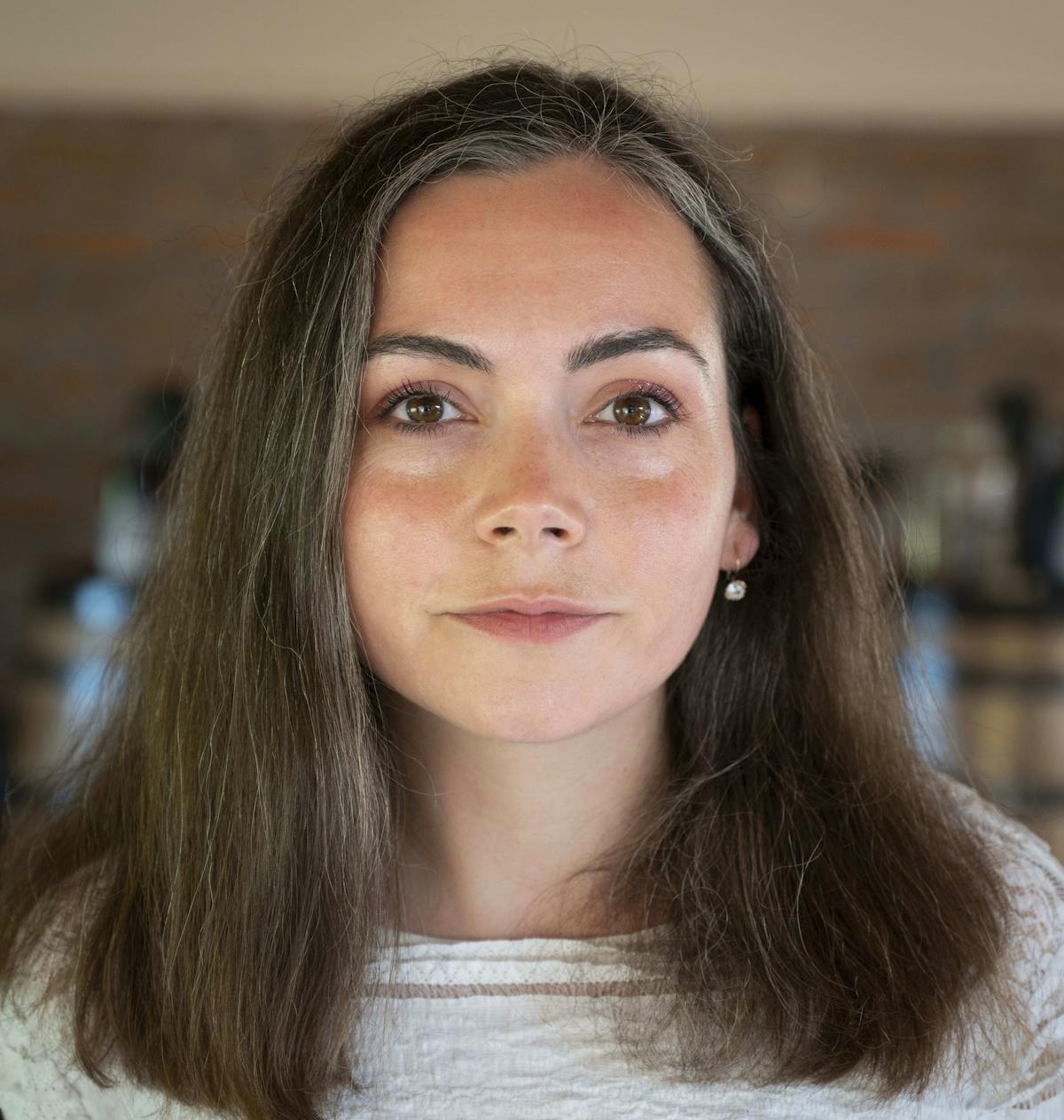
Smiljana
Since 2022, Smiljana Arnautović has taken over responsibility for the further operations of the winery and become a co-owner of production.
As part of the association "Young People from Rajac Wine Cellars", Smiljana participates in the organisation of the "Day of Wine and Good Mood" event for the first two years, a wine and music festival that takes place before each harvest – in the spirit of tradition and in honour of winemaking and wine lovers.
From 2022, Smiljana Arnautović assumed responsibility for the further operations of the company and at the same time became a co-owner of the production. For Smiljana, through intensive work with nature in the vineyard, through creativity in production and marketing, including the sensory perception of wine, which is closely related to the sensory perception of cooking, new creative levels and opportunities for positive self-development are opened. Regarding art and activism through art, Smiljana is involved with other young winemakers in organizing promotions and cultural events within the wine tourism of Rajac and Negotin Krajina. Together with Jelena Cvetković Zagorac, another female protagonist of the village of Rajac, Smiljana organizes the event 'Day of wine and good mood', a festival of wine and music, in the spirit of tradition before the grape harvest in honour of winemaking and wine lovers, for two years in a row.
Rajac and Raj Winery are places where women run businesses and they have strong initiative, good mutual cooperation, determination and the will to progress.